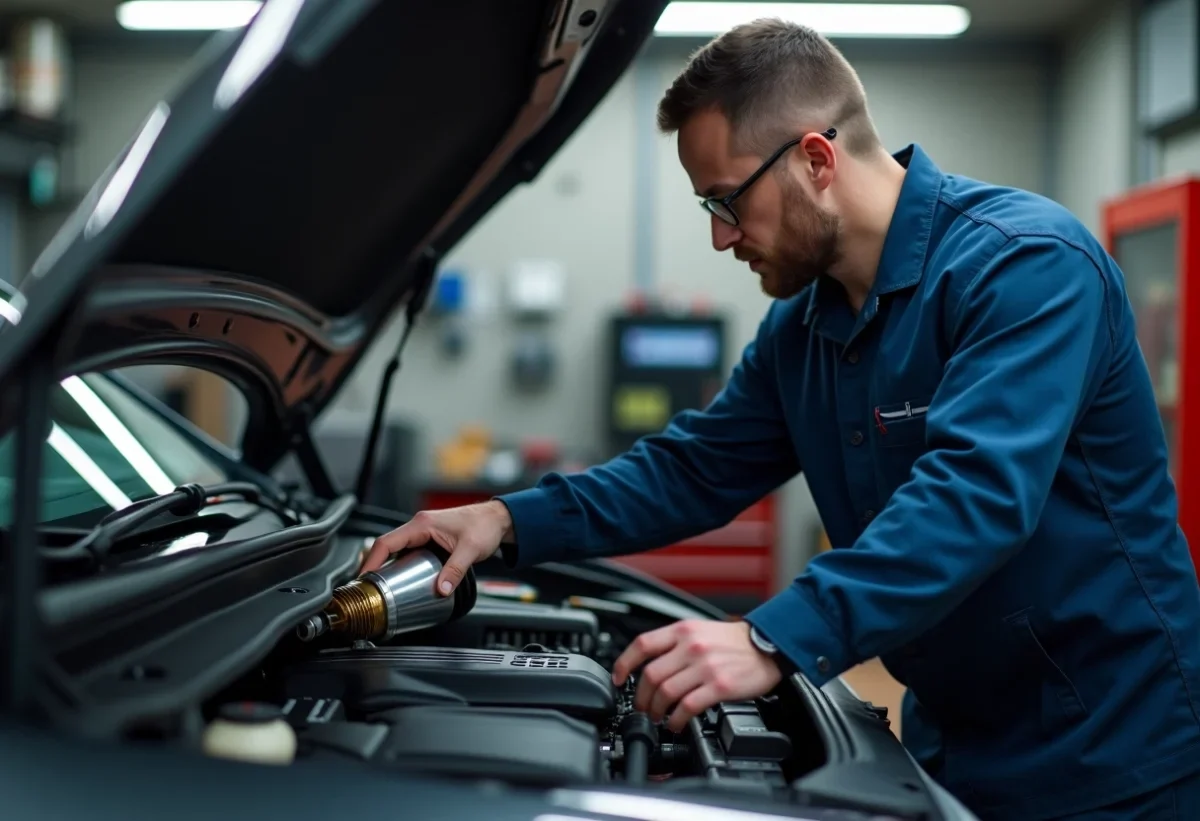
Diesel cars, popular for their fuel efficiency and high torque, require regular maintenance to ensure their longevity. Among the essential components, the particulate filter plays a fundamental role in reducing harmful emissions. This filter can quickly become a source of problems if neglected.
Drivers often encounter issues such as filter clogging, leading to a loss of power and increased fuel consumption. Rigorous maintenance and periodic regenerations are necessary to avoid costly repairs. Therefore, it is vital to monitor this component to maintain the proper functioning of the diesel engine.
Maintenance and Best Practices to Preserve Your Diesel Car’s Particulate Filter
To ensure the longevity of the particulate filter, also known as DPF, adopt rigorous maintenance practices. Several points deserve special attention.
Monitoring and Regeneration
The particulate filter in cars like the Citroën C4 or the Ford Focus C-MAX 2.0 TDCi is designed to capture soot particles. It can become clogged and cause issues such as decreased engine performance and increased fuel consumption. To avoid this, follow these recommendations:
- Regularly make high-speed trips on the highway to allow for the automatic regeneration of the DPF.
- Use specific additives like CLEAN FAP 5 EN 1 to clean the filter and prevent clogging.
- Check the proper functioning of the differential pressure sensor, which measures pressures upstream and downstream of the filter.
Detection and Prevention of Malfunctions
The differential pressure sensor integrated into the DPF can detect filter blockage. Issues with this sensor, such as damage to the pipes or connection cables, can lead to unnecessary regenerations or a failure to regenerate the DPF, causing a loss of engine power and increased fuel consumption. The risk of clogging the particulate filter on C4 is particularly high in the case of frequent urban driving and short trips.
Cleaning Products and Techniques
The use of products like CLEAN FAP 5 EN 1 can resolve clogging issues and prevent the appearance of soot particles. These solutions help maintain engine performance and reduce fuel consumption. 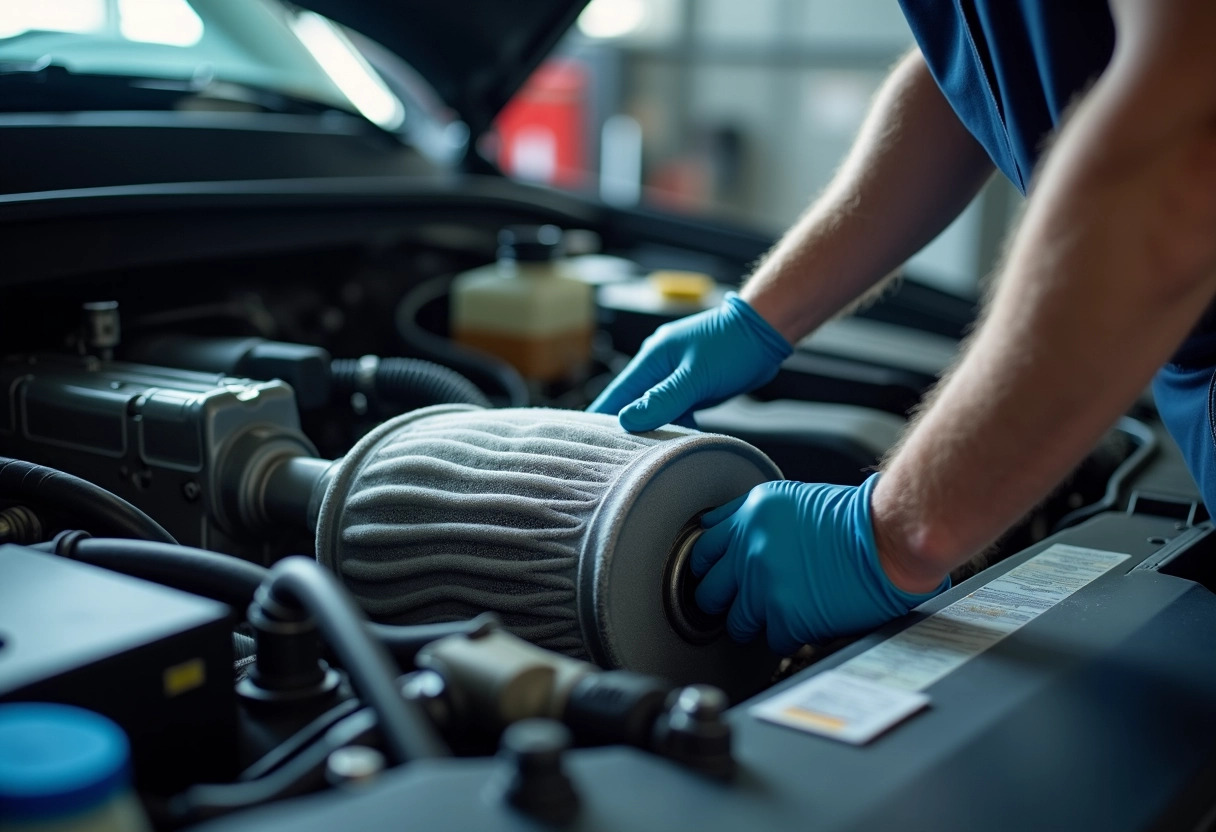
Solutions and Repairs in Case of Particulate Filter Malfunction
Identifying Defects
Malfunctions of the particulate filter, often identified by error codes such as P2002, P2452, or P2463, can be caused by several factors. Among these factors are urban driving at low speeds, short trips, poor-quality fuels, and economical driving.
Associated symptoms include alerts on the dashboard, a loss of engine power, and increased fuel consumption. To diagnose these issues, use an OBD-II diagnostic tool that will read the error codes and provide indications on the exact nature of the problem.
Repair Techniques
In the event of a pollution control DPF defect, several solutions exist:
- Use specialized products like CLEAN FAP 5 EN 1 to clean the particulate filter and eliminate soot deposits.
- Perform forced regenerations via diagnostic tools to burn off accumulated particles.
- Replace damaged sensors, particularly the differential pressure sensor, which plays a fundamental role in detecting DPF blockage.
- Consult the manufacturer for engine software updates that may improve regeneration management.
Risks and Prevention
Neutralizing the DPF, although sometimes tempting to avoid costly repairs, leads to severe legal and financial penalties. Instead, opt for sustainable solutions such as regular maintenance and the use of quality fuels. In case of doubt, always prioritize the advice and recommendations of your vehicle’s manufacturer.