
When a dog appears in a dream, the first question is what the image actually represents. The interpretation varies depending on the framework used: psychoanalytic, symbolic or spiritual. It also depends on the dreamer’s experiences, the emotional tone of the dream and the animal’s behavior. Rather than offering a single meaning, this article compares the main approaches to show what sets each framework apart and what contemporary research does—or does not—allow us to conclude.
Ways of interpreting dreams about dogs: a comparison of approaches
Three frameworks dominate the interpretation of dreams involving dogs. Each is based on different assumptions and leads to a distinct reading of the dream.
| Approach | Core assumption | Meaning of the dog | Main limitation |
|---|---|---|---|
| Freudian psychoanalysis | Dreams express repressed unconscious drives | Instinctive drives, desires that appear to be tamed | Interpretation depends heavily on the therapist |
| Jungian psychology | Dreams stage collective archetypes | Inner guide, faithfulness to oneself, the instinctive part of the psyche | Archetypes are difficult to verify empirically |
| Spiritual / symbolic interpretation | The dream carries a message or omen related to the dreamer’s life | Protection, loyalty, warning, emotional connection | No reproducible protocol; highly subjective |
For Freud, the dog embodies unconscious drives that appear to have been tamed. The domesticated animal masks a raw energy that the dreamer is trying to contain. Jung, by contrast, sees the dog as an archetypal companion that reveals the dreamer’s relationship with their own loyalty and instincts. The spiritual interpretation, the most common in online searches, associates dogs with protection, loyalty or a warning.
These three frameworks are not mutually exclusive, but they do not measure the same thing. When someone wants to understand the spiritual meaning of dreaming about hitting a dog, they often focus on the third column of the table. The framework chosen determines the answer.

How a dog’s behavior in a dream affects its interpretation
The dream scenario matters just as much as the animal’s presence. A calm dog lying at the dreamer’s feet does not carry the same meaning as a dog that bites or chases them.
Protective or friendly dog
In symbolic interpretation, an affectionate dog points to a strong bond of trust in the dreamer’s circle. It may represent a loyal person or a need for comfort that has been met. In Jungian psychology, this dog reflects a healthy integration of the instinctive self: the dreamer is listening to their fundamental needs.
Aggressive dog, bite or chase
In the Freudian framework, a dog that attacks or chases the dreamer signals repressed drives turning against them. Spiritual symbolism, on the other hand, sees it as a warning: a toxic relationship, a suspected betrayal or an ignored instinct demanding attention.
Psychoanalyst Tristan Moir describes dreams of being chased by ferocious dogs as isolated psychic forces turning against the person. According to this interpretation, someone who no longer recognizes their body’s needs becomes a stranger to themselves.
Puppy, lost dog, dead dog
Specific variations change the interpretation:
- A puppy suggests a new project, a recent relationship or a still-fragile need for affection. The tone is generally positive across all three frameworks.
- A lost or stray dog points to a sense of abandonment, the loss of an emotional anchor or loyalty being put to the test.
- A dead or dying dog symbolizes the end of a relationship, a period of protection or an instinct the dreamer has stopped listening to for a long time.
In every case, the dreamer’s emotions on waking matter more than the scenario itself. Psychologist Laure Fillette notes that the emotional tone of a dream matters more than the specific object in it.
What dream research can actually tell us
Dream dictionaries and articles on symbolism readily assign fixed meanings to dream images. Recent scientific research calls for greater caution.
Research has not established a universal meaning for a dog in a dream. Studies instead examine the links between dreams, memories and the dreamer’s emotions. The same dog may evoke comfort in one person and fear in another, depending on their personal history.
A study published in 2024 in Scientific Reports found that the emotional tone of memories recalled before sleep influenced the emotional tone of dreams. However, it did not establish that dream content changed emotions the following day. Presenting a dream about a dog as a form of psychological treatment or an omen therefore goes beyond what the available evidence supports.
The method itself has limitations: researchers analyze accounts given upon waking. These accounts depend on what the person remembers, not on the dream as it unfolded. Interpretation is based on a reconstructed memory, not the raw experience.
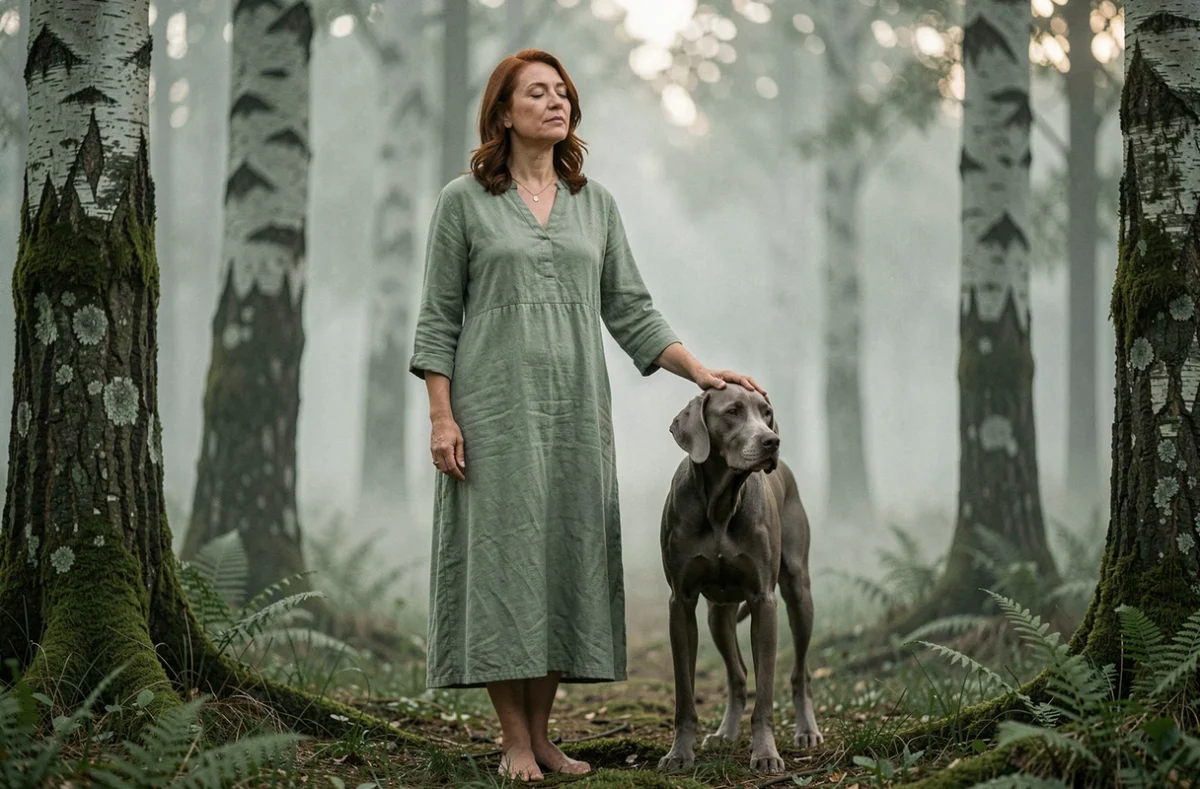
The spiritual meaning of a dog in a dream: beyond the symbol of loyalty
The spiritual dimension of this dream goes beyond the simple idea of loyalty. In several traditions, the dog acts as a guardian between two worlds. It watches over the body during sleep and accompanies the soul through its transitions.
This interpretation gives the dog an active protective role. A dog barking in a spiritual dream does not signify aggression but a warning: something in the dreamer’s waking life needs their immediate attention. A calm dog, by contrast, confirms that the dreamer is on a path aligned with their deepest values.
The black dog holds a special place in spiritual interpretation. Associated with the Jungian shadow or repressed fears, it invites the dreamer to explore what they are avoiding facing. Its presence is not necessarily negative: it signals that inner work is underway.
The richness of these interpretations should not obscure their subjective nature. No symbolic framework can replace the dreamer’s own exploration of the dream. The same dream about a dog, told to three different interpreters, will produce three distinct readings, each coherent within its own framework. The most reliable points of reference remain the emotion felt upon waking and the dreamer’s life circumstances—two things no symbol dictionary can guess on their behalf.