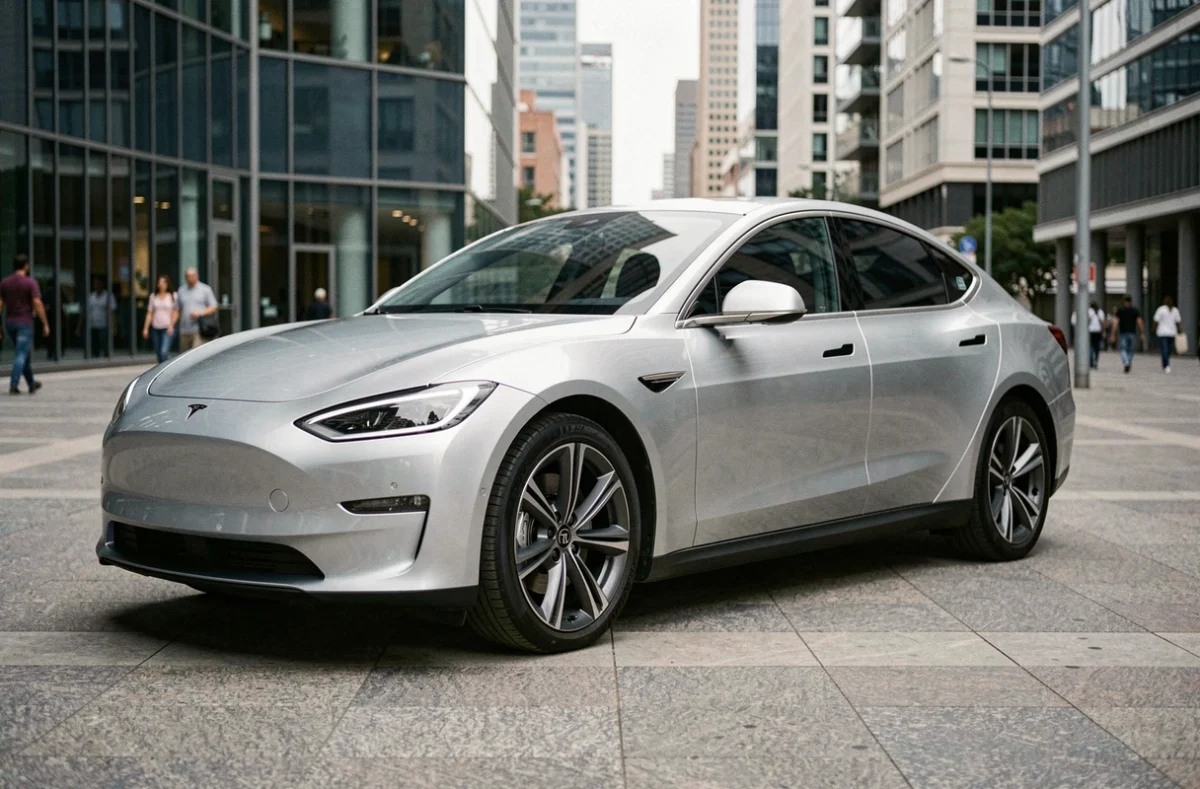
In 2024, the global automotive market reached a symbolic milestone: more than one in five new cars sold was electric, according to the International Energy Agency. This proportion masks very different realities from one continent to another, and electrification is just one part of the picture. Hybrids, social access devices, European regulations on CO2 emissions: the automotive trends of 2024 outline a fragmented landscape, where each market segment responds to distinct logics.
Electric Car Sales in 2024: China’s Disproportionate Weight
Global electric car sales exceeded 17 million units in 2024, according to the Global EV Outlook 2025 from the International Energy Agency. Behind this overall figure, a geographical imbalance is striking.
China alone accounted for more than 11 million of these sales. The pace of growth in Europe has been significantly more moderate, and the North American market remains a minority in this count.
This gap has direct consequences for competition. Chinese manufacturers like BYD, MG, or Xpeng benefit from a massive domestic market that allows them to amortize development costs and then offer aggressive prices for export. By following automotive articles from Officiel News, one can see how this dynamic redefines the balance of power between European and Asian brands in the electric segment.
Electric vehicles are progressing globally, but the transition remains very uneven across regions. Speaking of a uniform shift would be reductive: China drives the global statistic, while Europe advances at a pace that reflects persistent barriers, notably purchase price and the density of the charging network.

Non-Rechargeable Hybrids: The Dominant Category in Europe
Articles on automotive trends often present the market as a linear transition from combustion engines to battery electric vehicles. The European figures tell a different story.
According to the ACEA registration report for 2024, non-rechargeable hybrids have become the leading powertrain category among new cars registered in the European Union, ahead of gasoline and pure electric vehicles.
This success can be explained by a pragmatic compromise. The non-rechargeable hybrid vehicle (HEV) does not require any charging stations. Its additional cost compared to an equivalent gasoline model remains contained, and the reduction in consumption in the city is noticeable from the first kilometers.
Why Hybrids Are More Appealing Than Fully Electric in Europe
Several factors converge:
- The purchase price of a battery electric vehicle remains significantly higher than that of a non-rechargeable hybrid, even after government subsidies.
- The network of fast charging stations is progressing, but unevenly across countries. Rural and suburban areas remain under-equipped in several member states.
- The non-rechargeable hybrid requires no change in habits: no charging planning, no range anxiety, a regular gasoline fill-up.
For drivers who travel a lot on highways or who do not have access to a home charging station, the non-rechargeable hybrid offers a consumption gain without infrastructure constraints.
Social Leasing in France: Accessing Electric Vehicles Through Rental
In January 2024, France launched a social leasing scheme aimed at low-income households. The principle: to offer long-term rentals of electric cars at reduced rates, rather than relying solely on purchase incentives.
This mechanism changes the approach angle. Instead of subsidizing a purchase that many households cannot consider, even with assistance, social leasing makes the use of electric vehicles accessible without a heavy initial investment.
A Quickly Saturated Scheme
Demand has far exceeded the number of available vehicles, a sign that the main barrier to electric adoption is not a lack of interest, but the price. Social leasing has highlighted a segment of the population that is willing to drive electric, provided that the monthly cost remains comparable to that of a used combustion vehicle.
This long-term rental approach could influence other European countries. It shifts the question from “how much does an electric car cost” to “how much does the monthly use of an electric car cost,” fundamentally altering the calculation for households.
European CO2 Emission Regulation: What is Being Negotiated for 2035
The European Union maintains its goal of banning the sale of new combustion cars starting in 2035. Behind the scenes, negotiations among member states focus on the concrete modalities of this objective.
An agreement between Paris and Berlin, reached in October 2026 according to the Journal de l’Automobile, illustrates the complexity of the issue. It addresses the smoothing of CO2 targets, the status of plug-in hybrids in the emissions calculation, and the introduction of European preference criteria (Made in Europe).
These technical adjustments will have a direct impact on the ranges offered by manufacturers in the coming years. A more flexible scale for plug-in hybrids, for example, could extend the commercial viability of this powertrain beyond what the initial timeline suggested.
Supercredits and Flexibilities for Manufacturers
The supercredits mechanism allows for a favorable weighting of very low emission vehicle sales in a manufacturer’s overall balance. Specifically, a sold electric car can “offset” several combustion vehicles in the regulatory calculation.
This system avoids massive fines for manufacturers that do not meet average emissions thresholds while maintaining a strong incentive to electrify their ranges. European CO2 regulation shapes automotive catalogs as much as customer demand.
The automotive market of 2024 is not just a race towards electric. Non-rechargeable hybrids dominate European registrations, social leasing has revealed a latent demand for accessible electric vehicles, and regulatory negotiations continue to reshape the rules of the game for manufacturers. The next step will play out as much in Brussels’ legislative texts as in dealerships.