
Teachers in the Nantes region are seeing their practices evolve thanks to a range of digital tools. These varied and accessible instruments facilitate classroom management, enrich educational content, and support interaction with students.
Whether it’s collaborative platforms, content creation software, or performance tracking applications, each tool meets specific needs. The adoption of these technologies not only improves teachers’ efficiency but also makes learning more dynamic and engaging for students.
Essential Digital Tools for Teachers in Nantes
Teachers in the Nantes region benefit from several digital tools. The Nantes webmail, developed by the University of Nantes, stands out for its advanced features and integration into the Digital Work Environment (ENT). Its user interface is simple and intuitive, allowing for advanced search to quickly find messages. Teachers can customize and organize their emails by creating folders and subfolders, as well as manage professional email signatures.
The Nantes Webmail also offers essential collaborative tools. An integrated calendar allows for scheduling appointments and tracking important events, while file sharing via cloud storage spaces facilitates collaboration between teachers and students. Security is also a priority with SSL/TLS encryption ensuring the confidentiality of exchanges, an effective anti-spam filter, and two-factor authentication (2FA) for enhanced protection.
Training Modules
The training modules organized by DRANE, CANOPE, and INSPE aim to strengthen teachers’ digital skills. These hybrid training sessions combine videoconferencing and self-training modules, allowing teachers to consolidate their transversal digital skills. For example, module 72323 offers 10 hours of training for secondary school teachers, including mini-courses based on video capsules and targeted webinars.
Local Initiatives
The Loire-Atlantique Department is also implementing initiatives such as ‘My computer in high school’. Launched in 2021 and chaired by Christelle Morançais, this initiative aims to equip high school students with laptops for an annual budget of 20 million euros. Nearly 200,000 computers have already been distributed, thus promoting the integration of digital technology into educational practices.
Case Study
At the private high school Blanche de Castille, located in the Loire-Atlantique department and led by Fabien Marinoni, an experiment on the use of digital textbooks was conducted in 2023. With mixed results, the institution will return to paper textbooks in the 2024 school year, highlighting the need to continuously evaluate the effectiveness of digital tools in education.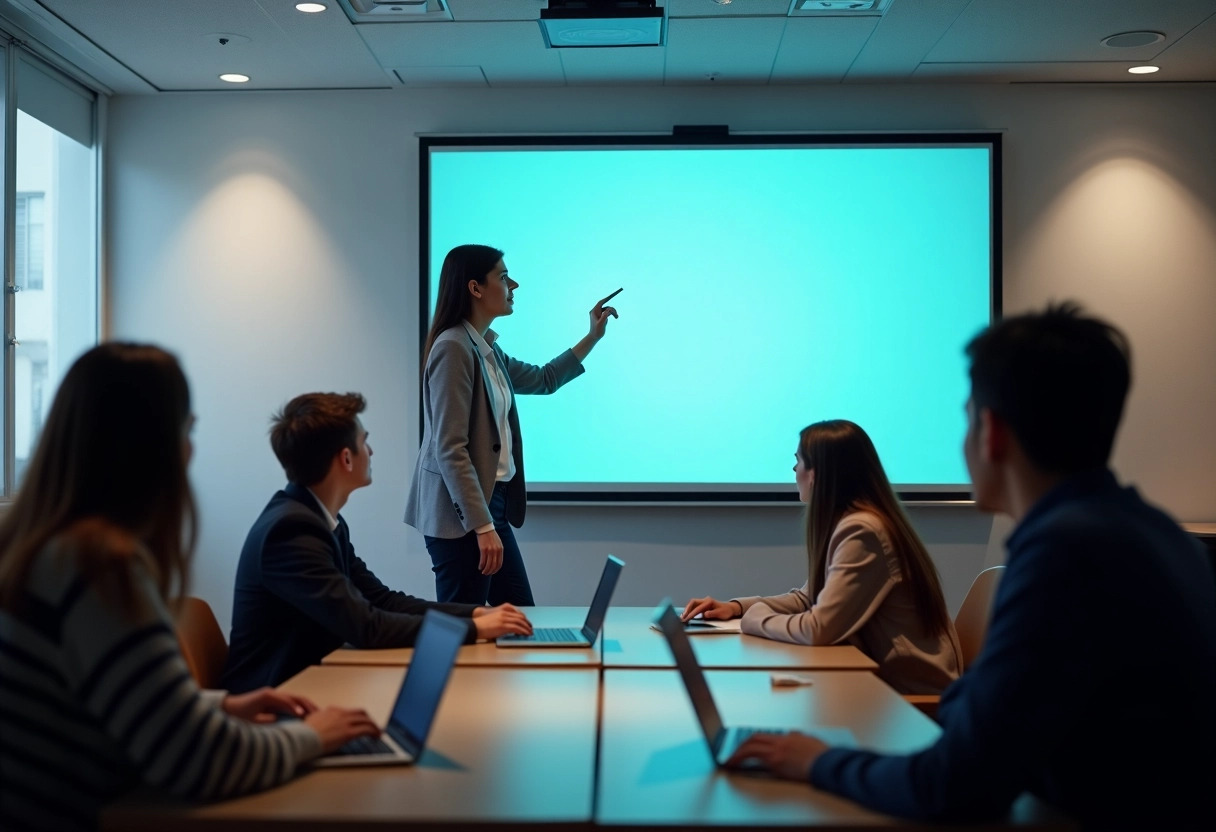
How to Integrate These Tools into Pedagogical Practice
The success of integrating digital tools into pedagogical practice relies on several strategic axes. The training modules offered by DRANE, CANOPE, and INSPE play a fundamental role in this regard. These trainings, aimed at secondary school teachers, seek to enhance their digital skills and help them master essential tools for effective classroom use.
Training Modules
- 72323 – Strengthening Teachers’ Digital Skills: 10 hours of hybrid training, including webinars and self-training modules, aimed at secondary school teachers to consolidate their transversal digital skills.
- 72339 – A Collaborative Escape Game with e-lyco: 12 hours of hybrid training, focused on showcasing students’ productions and cooperation through shared documents on e-lyco. This module allows for the development of the digital skills necessary for the PIX certification.
- 72340 – Developing Oral Practice with e-lyco: 12 hours of hybrid training, aimed at implementing collaborative pedagogical practices and facilitating the submission and tracking of students’ work, while preparing for the baccalaureate exams.
- 72057 – Generative AI for Teaching: 2 days of in-person training at INSPE Nantes, dedicated to discovering generative AIs and their pedagogical uses.
Innovative Pedagogical Practices
Teachers must adopt a proactive approach to integrate these tools into their daily practices. For example, using the integrated calendar of Nantes Webmail to plan collaborative work sessions or meetings with students. Creating shared folders in the cloud allows for smooth management of educational resources.
The use of collaborative tools like e-lyco helps to energize classroom interactions and highlight students’ productions. The fact that all students have the same equipment facilitates the implementation of collective projects, such as educational escape games or argumentative work in preparation for oral exams.