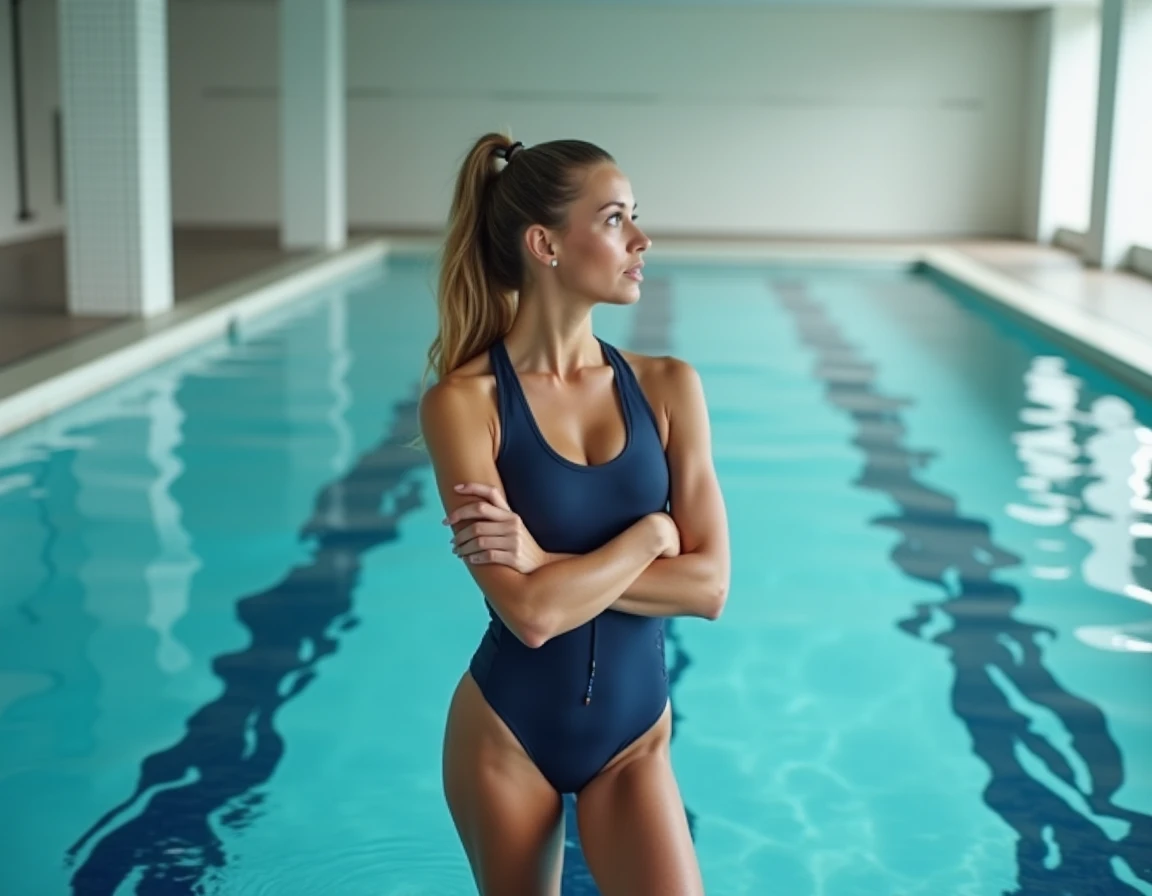
Everyone has seen someone lying on the water of a pool without moving, arms outstretched, perfectly still. And then there are those who sink as soon as they stop kicking. The difference between these two profiles is not a matter of will or pure technique. It is based on a set of physical, physiological, and sometimes psychological factors that interact in the water.
Body Density and Buoyancy: What Happens Below the Surface
Buoyancy follows Archimedes’ principle: an immersed body experiences an upward force equal to the weight of the displaced volume of water. If the density of the body exceeds that of water, it sinks. If it is lower, it floats.
The density of fresh water in a pool is around 1 kg per liter. The human body fluctuates around this value, sometimes above, sometimes below. Body composition tips the balance one way or the other.
Fat mass has a density close to 0.9 kg per liter, making it lighter than water. Muscle tissue, on the other hand, has a significantly higher density. Bones, dense organs, and the skeleton further weigh down the balance. A very muscular person with a low body fat percentage will therefore tend to sink more easily than a person of the same weight with a higher fat proportion.
This phenomenon partly explains the recurring questions from bodybuilders or lean runners trying to understand why I don’t float in the pool despite being in good physical condition. Physical fitness is not an indicator of buoyancy.
Lungs, Breathing, and Body Position in the Water
Body composition tells only part of the story. How we breathe and position ourselves in the water radically changes the outcome.
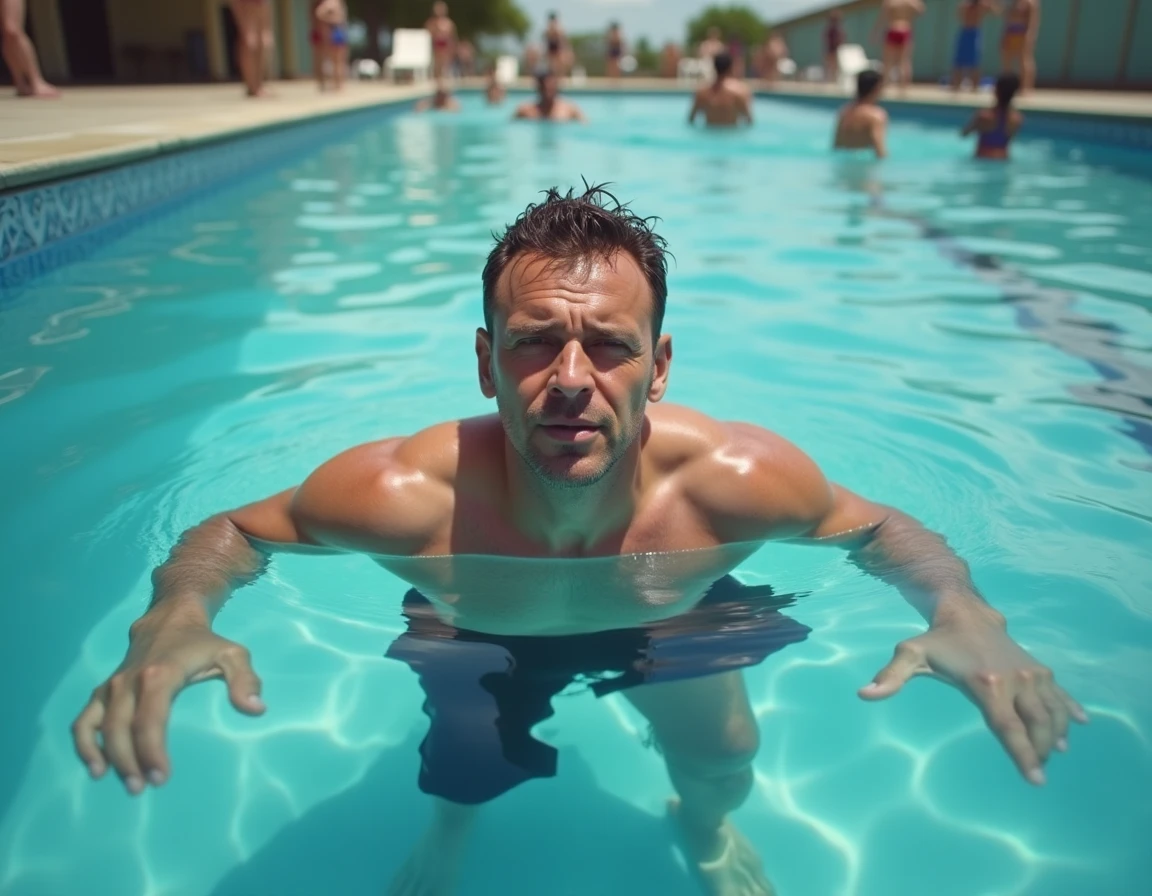
The lungs function as two internal air pockets. When fully inflated, they increase the volume of the chest without adding significant mass, which reduces overall density. Taking a deep breath and holding the air immediately improves buoyancy. Conversely, fully exhaling reduces this internal volume and may be enough to sink a person whose density is already borderline.
The position of the body plays an equally direct role. The legs, heavy with muscle and bone, tend to sink. When a swimmer tries to float on their back with legs extended and arms at their sides, the hips and lower limbs sink. Slightly spreading the arms above the head shifts the center of gravity upward and rebalances the buoyancy line.
- Keep the lungs filled with air at all times during the floating attempt, with short, quick breaths rather than a full exhale.
- Extend the arms above the head to redistribute body mass and lift the legs.
- Gently tilt the head back, ears in the water, which aligns the spine and reduces resistance from the lower body.
Aquaphobia and Muscle Tension: The Invisible Factor
Some people have a body density perfectly compatible with floating but still sink. The problem does not stem from physics. It comes from fear.
Aquaphobia causes a reflex muscle tension that stiffens the body, locks the chest, and prevents deep inhalation. The anxious swimmer adopts a curled position, pulls their knees up, and tightens their abdominal muscles. All these reactions increase apparent density and trigger erratic movements that accelerate sinking.
Stress-related hyperventilation also alters the breathing cycle. Instead of calmly holding the air, the person exhales in a jerky manner. The lungs never stay filled long enough to serve their role as natural floaters.
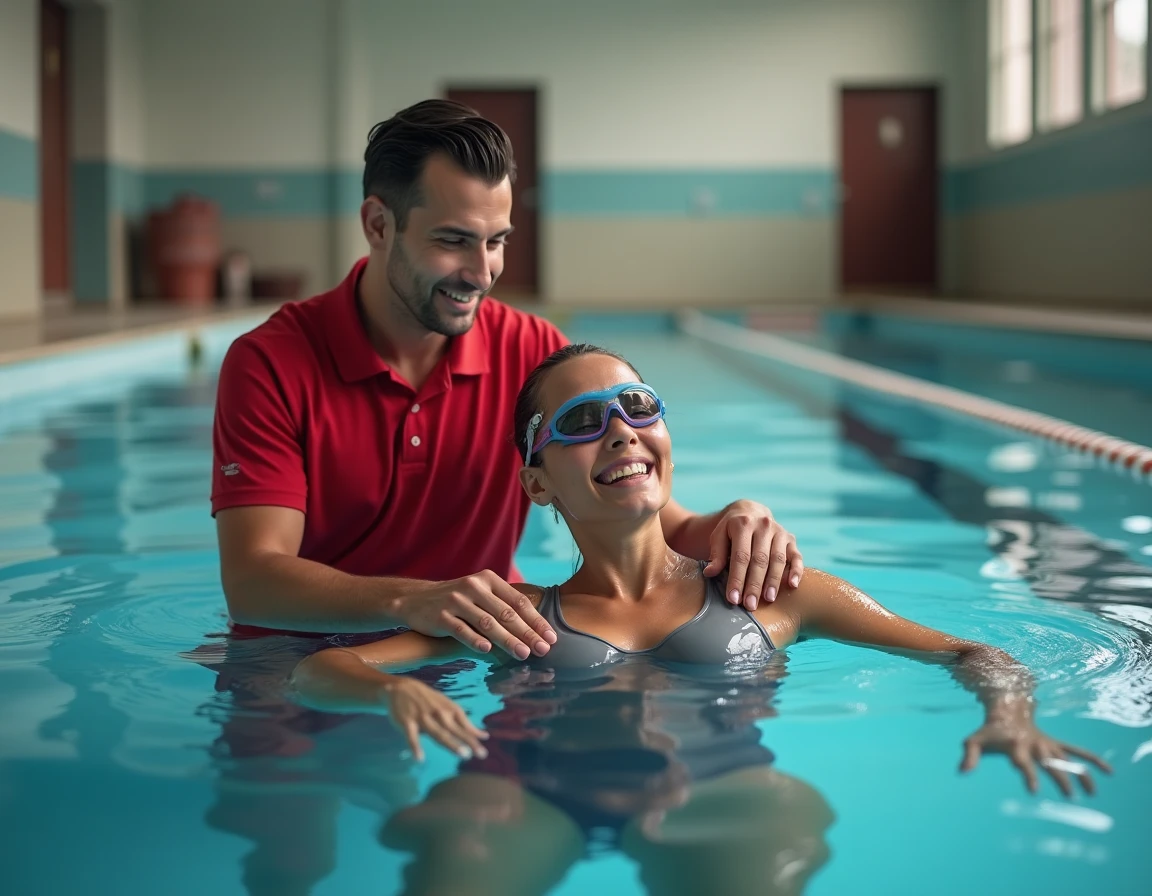
Cognitive-behavioral therapies combined with gradual exposure to water are among the most documented approaches to reduce this fear. The work is done in shallow water, with gradual exercises: face immersion, supported back position, then free floating. The confidence gained allows for muscle relaxation and a return to regular breathing.
Concrete Solutions for Floating in the Pool When Sinking
For those whose body density makes passive floating difficult, there are practical adaptations that go beyond mere willpower.
The pull buoy, placed between the thighs, compensates for the heaviness of the legs and keeps the hips at the surface. Triathletes frequently use it in training, sometimes out of necessity rather than tactical choice. A pull buoy rebalances the buoyancy line without altering the upper body swimming technique.
Newer devices integrate buoyancy directly into the fabric of the swimsuit, with technologies like FibreAir that disperse lift across the torso rather than concentrating it in one spot. These products cater to both children learning to swim and adults seeking discreet assistance.
- The pull buoy for long-distance training, particularly suited for muscular swimmers with low body fat.
- Swimsuits with integrated buoyancy for distributed support, less restrictive than a vest or armbands.
- Swimming boards to work on horizontal position and relaxation of the lower body.
- Sessions in saltwater (sea, certain specific pools) where the density of the medium naturally increases Archimedes’ buoyant force.
Adapting Technique Rather Than Forcing Buoyancy
A person who does not float in a static position can still swim effectively. Propulsion constantly compensates for the buoyancy deficit. Working on aquatic core stability, leg kick frequency, and arm movement amplitude allows for maintaining a horizontal position even without passive buoyancy.
Floating and swimming are two distinct skills. A dense swimmer who masters their technique can cover long distances without difficulty. Static buoyancy remains an indicator of body density, not an indicator of the ability to move in water. Not floating on the back does not mean not knowing how to swim, and confusing the two often hinders the progress of adults returning to swimming.