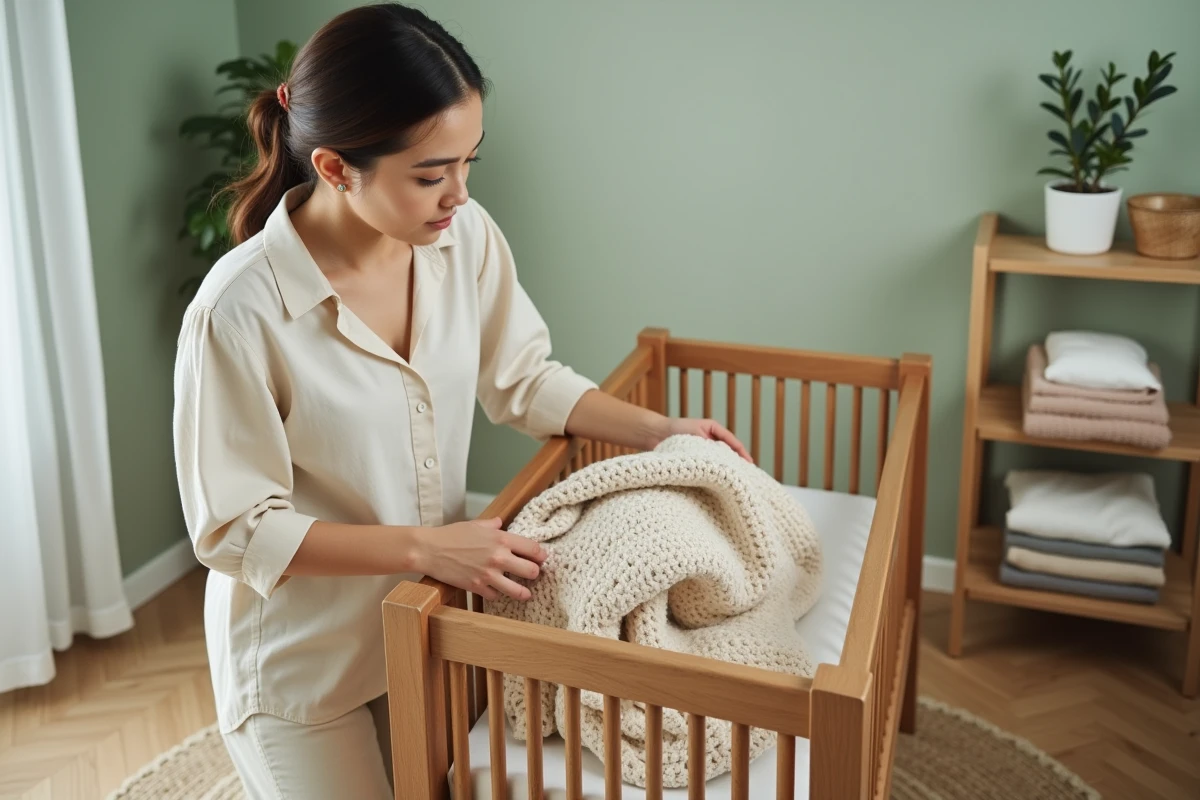
The choice of the bed accounts for the majority of layout errors in a baby’s room. Before decoration or storage, it is the compatibility between the sleeping arrangement, the mattress, and the room’s configuration that determines the quality of sleep for the infant and the practicality for parents on a daily basis.
Material standards and certification for baby beds: what changes in 2025
Regulation (EU) 2025/1042 of February 15, 2025, imposes mandatory certifications for paints and fabrics used in baby rooms. Specifically, every wooden bed sold in Europe must now comply with enhanced hypoallergenic thresholds, effectively eliminating solvent-based finishes that were still common two years ago.
We recommend checking for the updated marking on the product and not just on the packaging. A bed compliant with regulation 2025/1042 reduces the risk of skin allergies from the very first weeks. Water-based lacquers certified EN 71-3 remain the reference for wood finishes.
For parents exploring suitable sleeping options, furniture, and accessories, specialized platforms like niddou.com centralize references compliant with the latest regulatory requirements.
Crib, co-sleeper, or convertible bed: technical selection criteria
Each type of bed serves a specific purpose. The co-sleeper facilitates nighttime breastfeeding and reduces movements, but its usage rarely exceeds six months. The classic crib (60 x 120 cm) covers the period from birth to about two years, while the convertible bed (70 x 140 cm) supports the child until four or five years old.
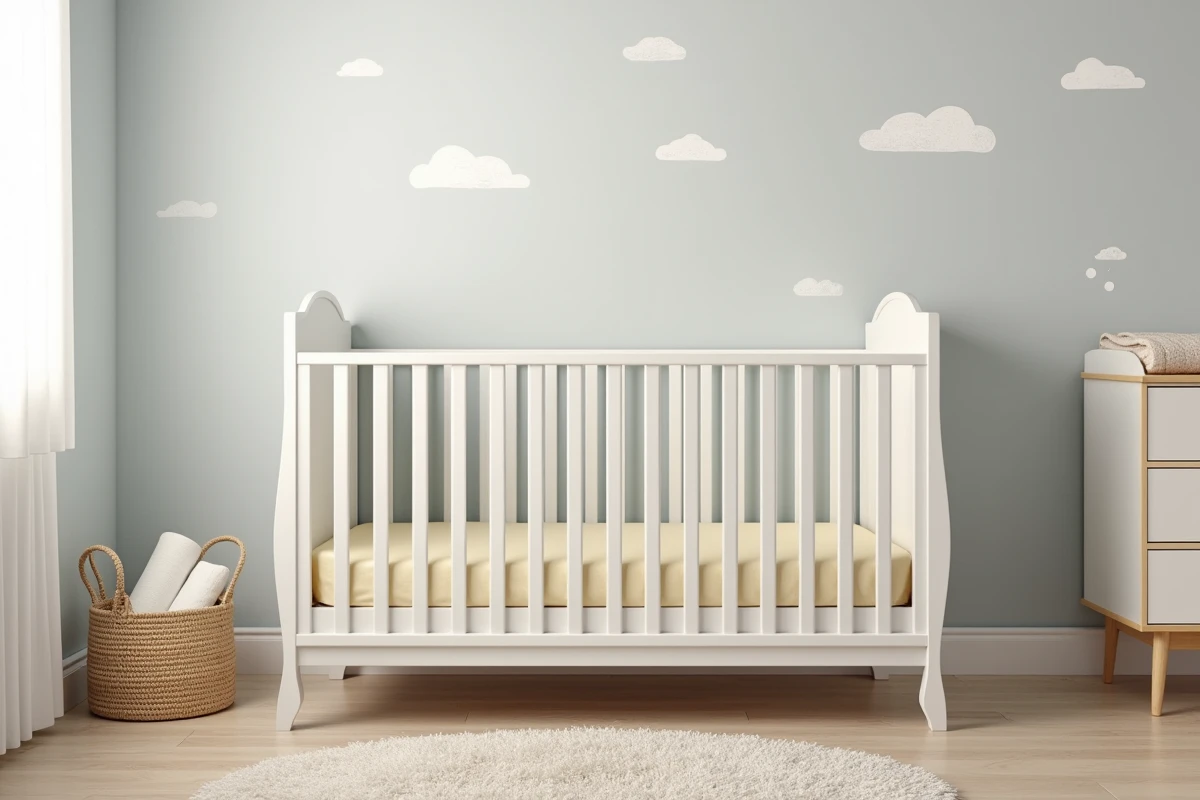
The convertible bed is only cost-effective if the provided mattress is of equivalent quality to a dedicated model. Too often, convertible kits include a starter mattress whose density is unsuitable beyond the first year. We observe that parents end up purchasing a separate mattress, negating the initial savings.
- Co-sleeper: prioritize a model with certified attachment to the parental bed, with a side panel adjustable to at least three heights
- Crib: the spacing between bars must remain between 4.5 and 6.5 cm (NF EN 716 standard). A height-adjustable mattress base (minimum two positions) simplifies putting the newborn to bed and then transitioning to independence
- Convertible bed: ensure that the extension system does not create gaps between the panels, as a gap of more than a few millimeters poses a risk of pinching
Baby mattress: density, thickness, and compatibility with the bed
A mattress that is too soft is the primary risk factor in an infant’s sleeping arrangement. The firmness of the mattress takes precedence over the comfort perceived by adults. An infant needs support that does not sink under their weight to keep the airways clear.
The recommended thickness is between 10 and 12 cm for a standard crib. Beyond that, the ratio between the height of the mattress and that of the bars decreases safety. Below that, support becomes insufficient after a few months of use.
The most overlooked point remains dimensional compatibility. No gap should exist between the mattress and the bed frame. If you can slide more than two fingers between the edge of the mattress and the wall, the mattress is too small. This simple test avoids the risk of lateral suffocation.
Baby room layout: organization by zones
Dividing the room into functional zones changes daily management. The sleep zone (bed, night light, possibly a connected monitoring sensor) should be the farthest from the window to limit temperature and light variations.

The changing area ideally should be placed immediately next to the bed, with a changing table fixed to the wall or placed on a dresser at an ergonomic height for the parent. Vertical storage (open shelves or bins) within reach reduces trips during changing.
IoT sleep monitoring sensors, adopted by an increasing number of parents since 2024, attach under the mattress or on the bed without altering the room’s aesthetics. These devices measure breathing and ambient temperature and serve as a complement to traditional baby monitors for parents concerned about sudden infant death syndrome.
- Sleep zone: bed placed against a load-bearing wall, away from radiators and windows. Room temperature maintained around 18-20 °C
- Changing zone: changing table with raised edges, diapers and care products accessible without putting the child down
- Awake zone: floor mat, a few rotating toys, clear space for free movement as soon as the child starts to roll over
Colors and lighting in the baby room: impact on the circadian rhythm
Recent research published in Sleep Medicine Reviews shows that cool blue tones promote faster falling asleep, while warm yellow shades stimulate wakefulness. This finding challenges the reflex of total pastel looks often recommended indiscriminately.
We recommend reserving cool tones (blue-gray, sage green) for walls near the bed, and concentrating warm colors in the awake zone. Indirect lighting with variable temperature remains the best investment to accompany the day-night cycles of the infant. An orange spectrum night light below 2,700 K does not disrupt melatonin secretion.
For wooden furniture, paints compliant with the European directive 2025 are available in a sufficiently wide range of shades to not sacrifice decorative coherence for health safety. The choice of bed, mattress, and room layout forms a technical whole where each element conditions the others. A well-thought-out layout from the start avoids costly adjustments over the months.