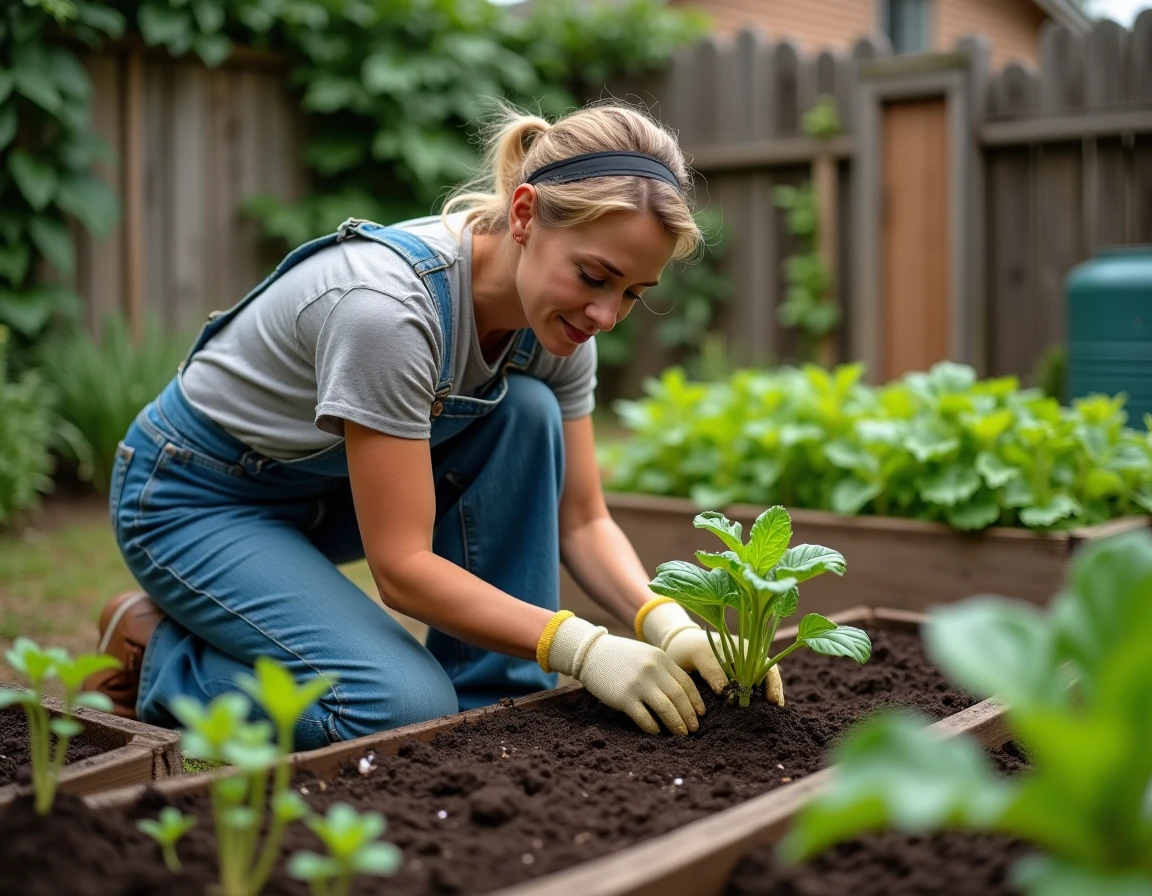
A living soil, a few local plants, and a water source are enough to transform a piece of land into a functional ecosystem. Creating an ecological garden does not require rethinking everything at once, but rather understanding how soil, insects, and plants interact to find their balance.
Living soil and natural fertility: the often-neglected foundation of the ecological garden
Have you ever noticed that a forest soil never receives fertilizers yet remains fertile? This mechanism relies on microbial life. Bacteria, fungi, and earthworms decompose organic matter and release nutrients that are directly assimilable by the roots.
In a conventional garden, deep digging and chemical fertilizers disrupt this cycle. Since January 1, 2019, the Labbé law prohibits individuals from using synthetic pesticides. This regulatory constraint encourages the adoption of practices that respect soil biology.
Several resources detail the possible arrangements for cultivating in accordance with these principles, notably the garden on Maisons Alternatives which addresses the overall design of a sustainable outdoor space.
Three concrete actions protect and nourish your soil:
- Mulch with a thick layer of dead leaves, wood chips, or straw. Mulching limits evaporation, regulates soil temperature, and continuously nourishes decomposer organisms.
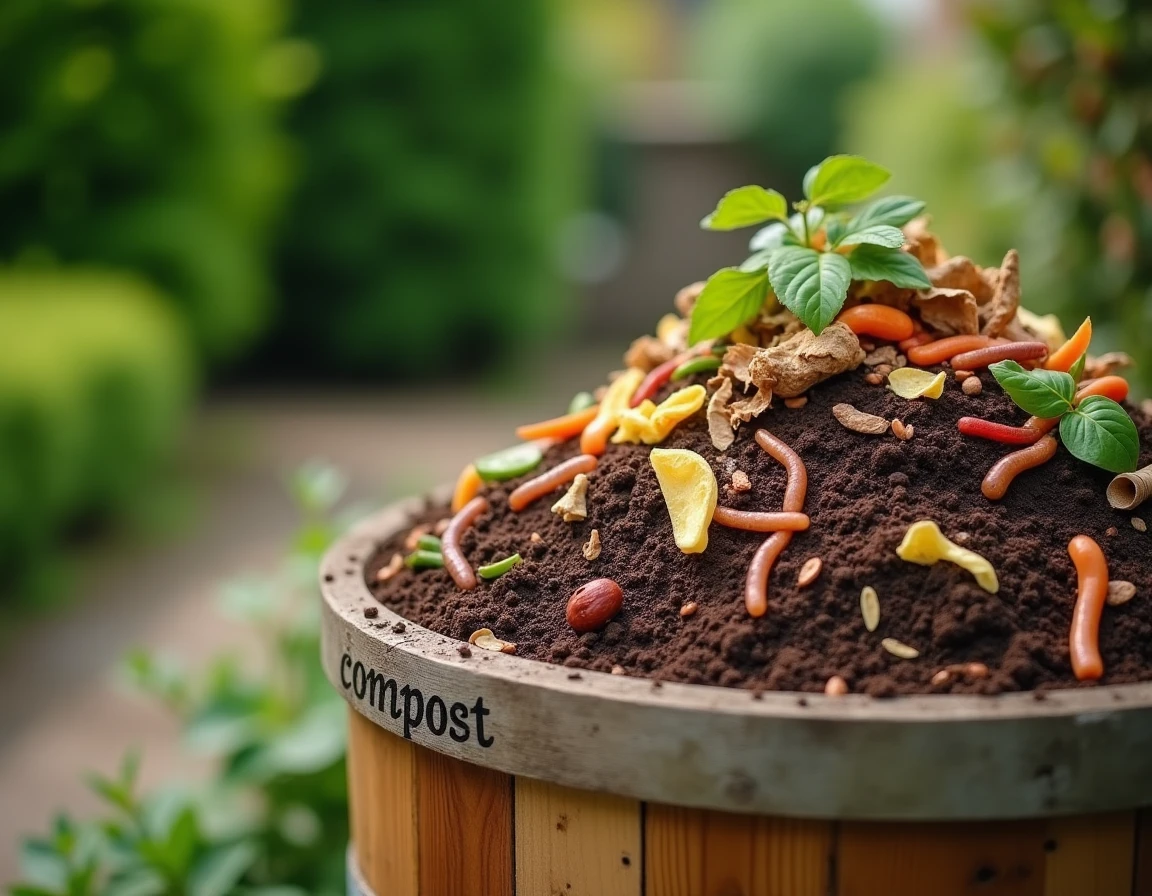
- Practice surface composting by placing green waste (peelings, clippings) directly at the base of plants, without using a bin. Earthworms take care of it.
- Avoid turning the soil: prefer a broadfork, which aerates without inverting the layers. Each layer of soil houses specific microorganisms that die when exposed to air or buried too deeply.
Local plants and plant associations for a resilient garden
Installing a hedge of thuja or a lawn of ryegrass requires a lot of water, maintenance, and offers almost nothing to local wildlife. Indigenous plants, adapted to the climate and soil of your region, grow with less watering and attract the corresponding pollinators.
Why prioritize native species
A local plant has co-evolved with the insects of the area. A black elder, for example, feeds dozens of species of birds and insects. An ornamental exotic shrub, even when flowering, is often ignored by wildlife.
To identify suitable species, consult specialized nurseries in regional flora. Choosing plants adapted to the existing soil avoids amendments and corrective watering.
Successful associations in the vegetable garden
Some plants protect each other. Carrots repel the leek fly, basil wards off certain aphids from tomatoes. These interactions allow for the absence of treatments, even biological ones.
Alternating botanical families from one season to another (crop rotation) also breaks the cycle of pests. A soil that grows tomatoes for three consecutive years becomes depleted and accumulates pathogens. Alternating botanical families from one year to the next reduces this risk without chemical intervention.
Water management in the garden: saving without depriving the plants
Water is the most underestimated resource in an ecological garden. Watering with a hose in full sun wastes the majority of the volume through evaporation. A few design choices can radically change the situation.
Collecting rainwater remains the most cost-effective action. A collector connected to a downspout covers a significant portion of the watering needs of a family vegetable garden. Rainwater, which is non-calcareous, is better suited for plants than tap water.
Watering in the evening or early morning limits evaporation. Drip irrigation, placed under the mulch, delivers water directly to the roots. This system significantly reduces water consumption compared to sprinkler irrigation.
You can also dig slight basins around trees and shrubs to retain rainwater where it is useful. Every arrangement that slows down runoff benefits the garden and the soil.
Welcoming biodiversity: insects, birds, and micro-habitats
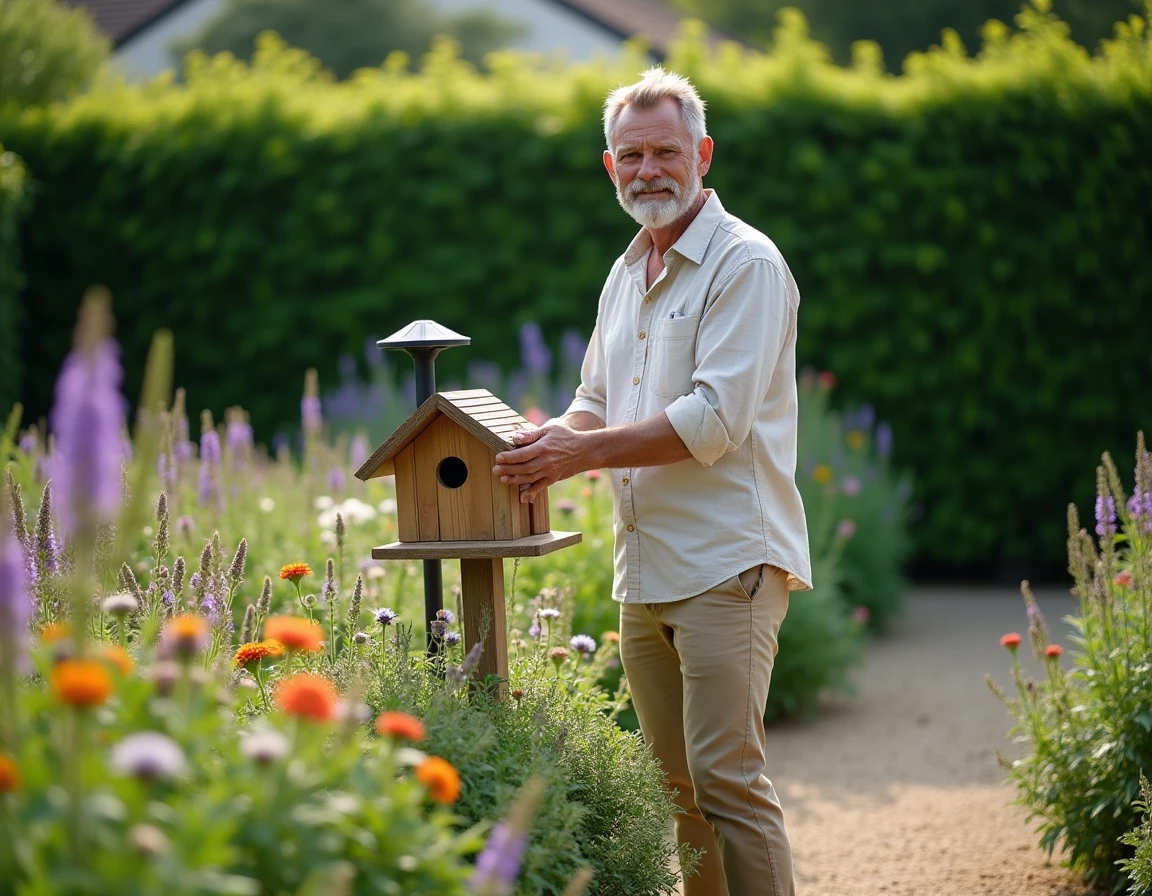
An ecological garden is not just a place for production or relaxation. It is a living space where every organism plays a role. Ladybugs regulate aphids, hedgehogs eat slugs, and wild bees pollinate fruit trees.
Creating concrete refuges
Why would these beneficial organisms abandon a garden that offers them shelter and food? A few simple arrangements are enough:
- Leave a pile of dead wood in a corner. It shelters beetles, fungi, and small mammals.
- Install a water point, even modest (a dish filled with gravel and water). Pollinating insects and birds need it, especially in summer.
- Maintain a strip of garden that is not mowed. A natural meadow area, even small, multiplies insect diversity.
- Plant a diverse hedge (hazel, dogwood, blackthorn) rather than a single-species hedge. It offers berries, nectar, and nesting sites throughout the year.
Labels and programs for going further
The “LPO Refuges” program allows you to have your garden recognized as a space favorable to biodiversity. Registrations for this type of labeling have seen significant growth since 2020. Participating provides access to personalized advice and a network of committed gardeners.
An ecological garden does not seek visual perfection. A few dead leaves under a hedge, a fallow area, a dry stone wall colonized by lizards: these details, often perceived as disorder, are signs of a functioning ecosystem. Accepting this slight controlled abandonment is the true shift towards environmentally respectful gardening.