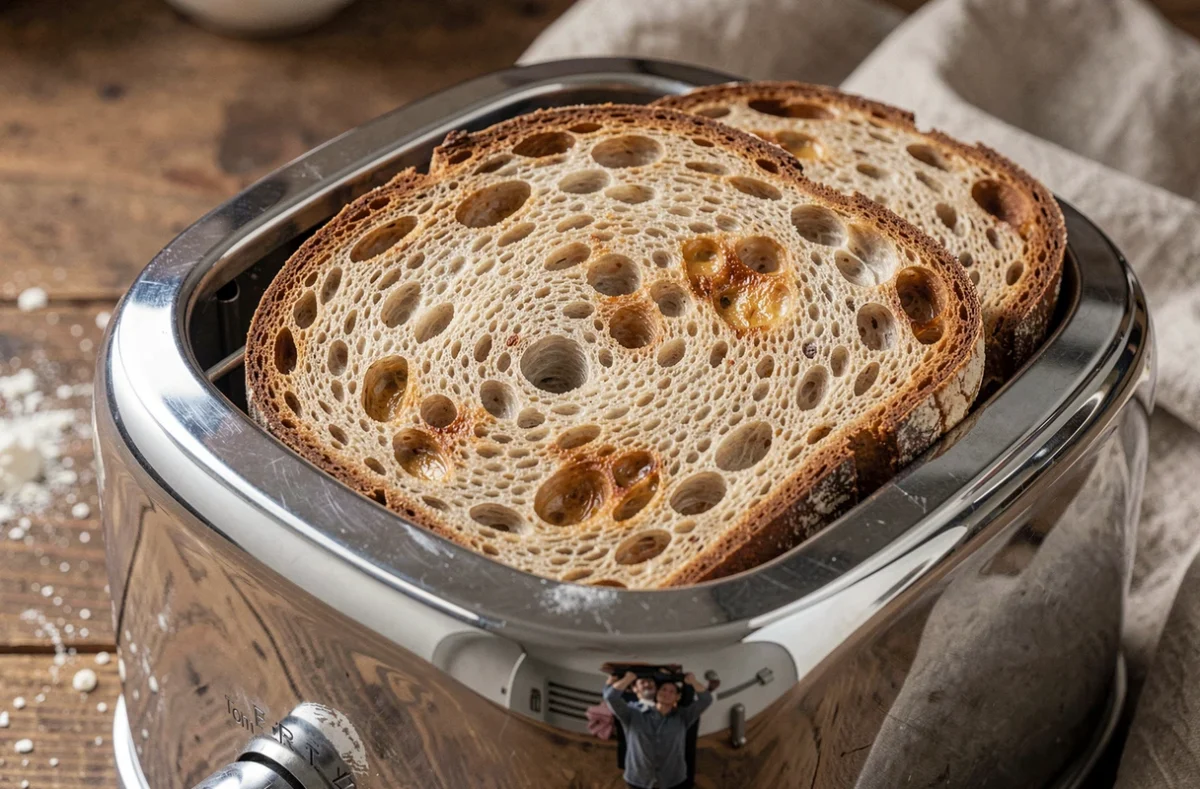
When a slice of bread puffs up in the toaster, it isn’t rising in the biological sense. Its volume increases because the water trapped in the crumb turns to steam when heated. This rapid process has nothing to do with fermentation, which makes dough rise hours before baking. Understanding the difference between these two mechanisms is already half the secret to understanding bread.
Steam and fermentation: two completely different kinds of rising
Have you ever noticed that toast comes out of the toaster thicker than it went in? This puffing is caused by water vapor. The crumb contains residual moisture. When heated rapidly, this water turns to gas and pushes the bread’s honeycomb structure outward.
Fermentation, by contrast, happens much earlier. In the mixer and then in the proofing basket, yeast converts the flour’s sugars into carbon dioxide. This gas gets trapped in the gluten network, and the dough slowly increases in volume, sometimes over several hours.
In other words, toast doesn’t “rise”—it expands. The actual rise happens at the bakery, while the dough is fermenting. An article exploring whether toast rises on ABC Sports explains the process with visual examples.
Bulk fermentation and final proof: the two stages of bread fermentation
Saying that bread “rises” once is an oversimplification. Fermentation has two distinct stages, each with a different role.
Bulk fermentation, just after kneading
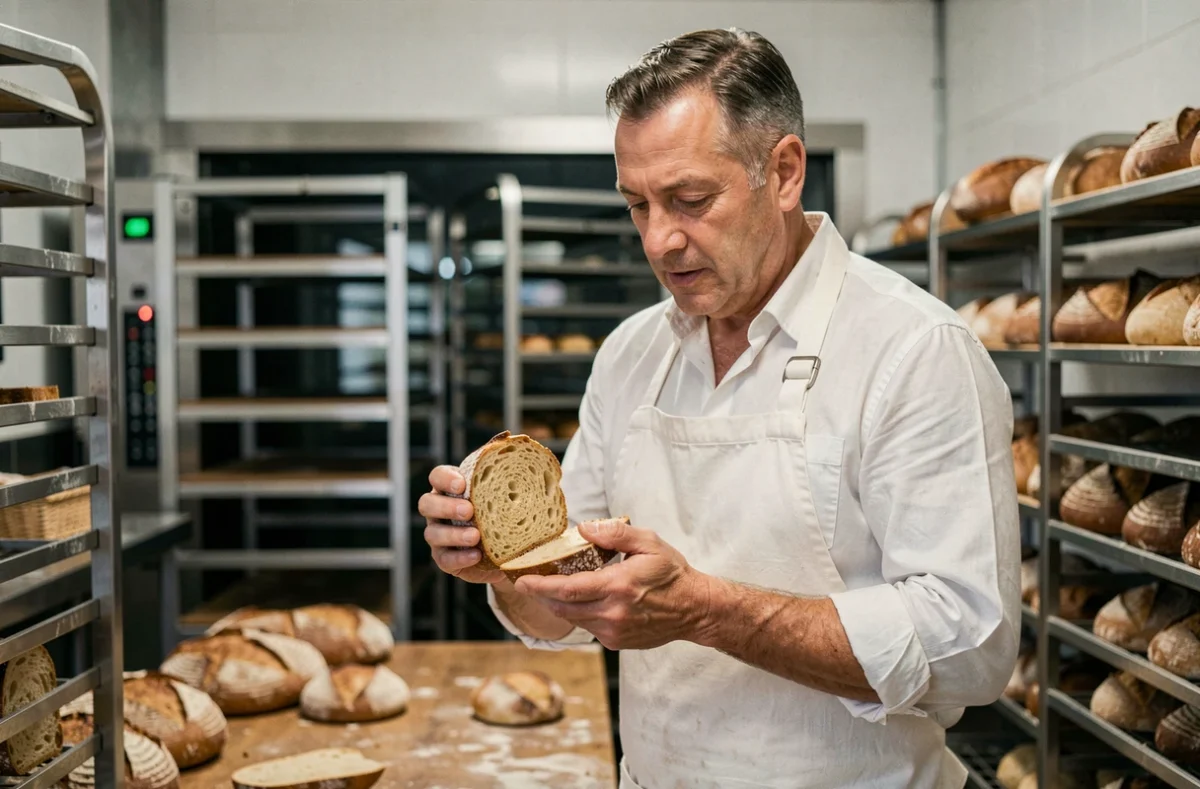
Bulk fermentation begins as soon as kneading stops. The dough rests as a single mass in a tub. The yeast starts producing carbon dioxide, while the gluten network gradually develops.
The longer the bulk fermentation, the more complex the dough’s flavors become. The dough’s temperature, the type of flour, the amount of salt, and the quantity of yeast all affect how quickly this stage progresses.
Final proof, after shaping
Once the dough has been divided and shaped into baguettes, rolls, or bâtards, it rests again. This is the final proof. This second rise gives the bread its final volume before it goes into the oven.
Extending bulk fermentation or final proof does not produce the same result. A long bulk fermentation develops flavor. An overlong final proof weakens the structure, causing the bread to collapse during baking. Bakers adjust these times based on the room temperature and how the dough behaves.
Yeast, sourdough, tradition: what the words on the label really guarantee
You buy a loaf labeled “French tradition.” You assume it has fermented for a long time, perhaps with sourdough. The regulatory reality is more nuanced.
French tradition bread does not require sourdough or a minimum fermentation time. Regulations allow baker’s yeast, sourdough starter, or a combination of the two. What the designation prohibits is the use of additives and baking improvers. Otherwise, the process is left up to the baker.
“Sourdough bread,” on the other hand, is subject to different criteria. It must be made with a sourdough starter that provides most of the leavening. The term “homemade,” meanwhile, means the bread is kneaded, shaped, and baked at the same place where it is sold.
- Traditional bread: no additives, but the baker can choose yeast or sourdough
- Sourdough bread: the starter must be the main source of fermentation
- Homemade bread: every step takes place on-site, from kneading to baking
In a response published on January 9, 2024, the French government reiterated that the designation “French tradition bread” regulates the recipe and process but does not guarantee nutritional quality. Nutritional quality varies depending on the flour and the methods each baker chooses.
Golden toast or burnt toast: why color matters
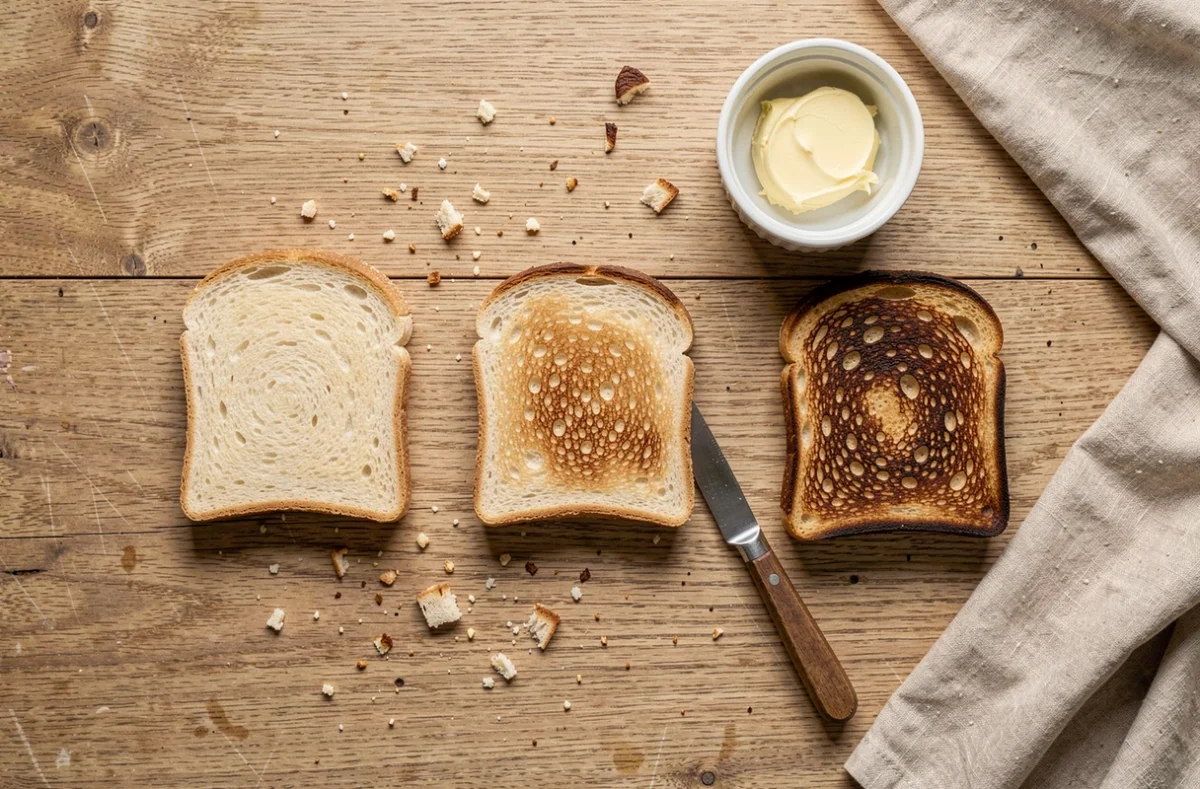
The browning of toast deserves an explanation separate from rising. As the slice heats up, the sugars and amino acids in the crumb react with each other. This is the Maillard reaction, which gives toast its golden color and toasted flavor.
But when toast gets very dark, another compound comes into play: acrylamide forms when starchy foods are heavily browned. The European Union has adopted mitigation measures for certain food categories under Regulation 2017/2158.
The recommendation is simple: aim for golden rather than dark brown toast. Moderate toasting preserves the flavor without unnecessary exposure to this substance.
Getting homemade bread to rise: variables to keep an eye on
If you make bread at home, the rise depends on a few practical factors you can control.
- Dough temperature: dough that is too cold ferments slowly; dough that is too warm ferments quickly but develops flat flavors
- Amount of yeast or sourdough starter: the more you use, the faster fermentation proceeds, but too much can give the bread a pronounced yeasty taste
- Salt: it slows fermentation, and the amount used directly affects how quickly the dough rises
- Type of flour: flour with a high gluten content traps gas more effectively and produces a more open crumb
Bread that doesn’t rise often needs more time, not more yeast. Before increasing the amount, try extending bulk fermentation in a place with a stable temperature. Patience is still the best aid to fermentation.
So the toast puffing up in your toaster is simply a thermal effect—a final burst of steam in a crumb that has already set. The real magic of bread happens much earlier, between the mixer and the oven, during those hours of quiet fermentation that neither the packaging nor the label can fully describe.