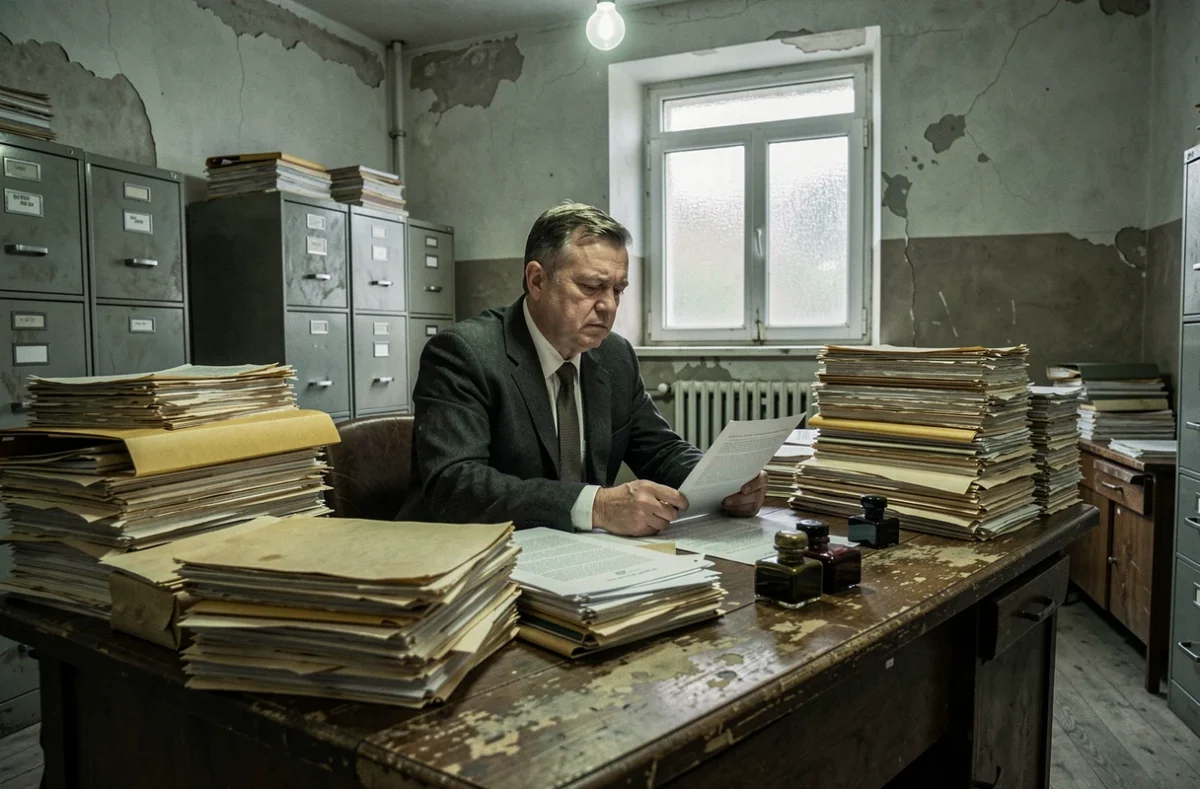
The adjective Kafkaesque has become detached from its author and turned into a tool for diagnosing reality. Franz Kafka, born in Prague in 1883 and died in 1924, published only a fraction of his work during his lifetime. We owe most of it to the disobedience of Max Brod, his literary executor, who refused to burn the manuscripts. This fraught transmission established a singular relationship with the author: each generation inherits an incomplete Kafka and reconstructs him.
Kafka’s drawings: a visual corpus long hidden from view
Competitors approach the fascination with Kafka from a literary or philosophical perspective. Almost all overlook a documented fact: hundreds of Kafka’s drawings, kept out of sight for decades, became accessible in 2021. These sketches—twisted bodies, spindly silhouettes, animal figures—offer a non-textual way into his world.
The issue goes beyond biographical curiosity. These drawings raise a question of interpretation: should they be read as extensions of his stories or as an independent graphic practice? Kafka the artist complicates Kafka the writer, and that complexity fuels the fascination. An author whose work still has entire facets waiting to be discovered remains alive in the critical conversation.
We can also read them as a lesson in preserving literary archives. The collection passed down by Brod, which went through Israel and became the subject of legal proceedings, consists mainly of Brod’s own documents. The presence of unpublished Kafka manuscripts in the collection has not been established with certainty.
The story of these archives is therefore as much about law and preservation as it is about the promise of literary discovery, which explains why a specialist resource such as https://www.kafkaiens.org is dedicated to documenting these different layers of reception.

Kafka on stage: performance as a space for reinterpretation
Kafka’s enduring presence is measured not only by the number of his readers. His texts fuel a steady stream of stage adaptations, from classical theater to recent immersive productions. The Metamorphosis, The Trial and In the Penal Colony lend themselves to performance because their narrative structure is built around situations rather than plots.
A Kafka text works like a stage device. A character is placed in a restrictive setting, and the story unfolds the consequences of that constraint without ever resolving it. Directors find the material highly adaptable: the same story can become a physical solo, an ensemble piece or a digital installation.
What sets Kafkaesque adaptations apart from other literary adaptations is that there is no psychological explanation to provide. Like the reader, the audience does not need to understand why Gregor Samsa wakes up as an insect. They need to watch what happens next. This narrative economy gives performers room to work.
Kafka’s digital reception: memes, absurdity and Gen Z
Several observers have documented a phenomenon: Kafka circulates widely in digital culture through repurposed quotations, memes and references to bureaucratic absurdity. Some of this interest, particularly among younger readers, stems from two themes:
- Absurdist humor: Kafkaesque situations (a man transformed into vermin, a defendant who does not know what crime he is accused of) translate naturally into the language of memes, where nonsense accumulates until it produces meaning
- A sense of powerlessness in the face of systems: administrations, algorithms, automated procedures—anything that evokes the invisible court in The Trial resonates directly with everyday experiences on digital platforms
- The brevity of the texts: several of Kafka’s stories are only a few pages long, making them well suited to fragmented reading habits and easier to share online
This evidence of how Kafka is received does not prove that more people are reading him. It does, however, show that Franz Kafka’s work continues to shape an active collective imagination beyond his traditional readership.

Every era transforms Kafka: author, archive, icon
The most compelling explanation for Kafka’s longevity is not the relevance of his themes. Bureaucracy, alienation and absurdity existed before him and appear in the work of other writers. What sets Kafka apart is the adaptability of his work.
In the 1950s and 1960s, he became a prophet of totalitarianism. In the decades that followed, readers revisited his work through psychoanalytic and then existentialist lenses. Today, Kafka is at once a literary author, a rediscovered artist, material for the stage and a digital icon. This multiplicity of ways into his work ensures that each new generation can find its own starting point.
The question of the archives reinforces this dynamic. As long as documents remain disputed, classified or uncertain, the work remains open. An author whose body of work is complete eventually becomes fixed in a dominant interpretation. Kafka escapes this closure because his corpus itself has not been settled.
What Kafkaesque still means in literature
The adjective Kafkaesque has taken on a life of its own, independent of the work. It is used to describe absurd bureaucratic situations without necessarily having read The Trial. This spread into everyday language cuts both ways: it raises Kafka’s profile while simplifying his world.
Rereading the texts after using the word for years reveals that the literary Kafkaesque is not simply absurd. It also involves cool descriptive precision, dry humor and close attention to everyday gestures that ground the fantastic in the mundane. The authentic Kafkaesque is stranger than the everyday use of the word suggests.
Franz Kafka left behind neither a manifesto nor a doctrine. His texts function as open-ended devices that every reader, director and internet user closes in their own way, if only temporarily. It is this structural incompleteness, rather than any universal message, that keeps the fascination alive.