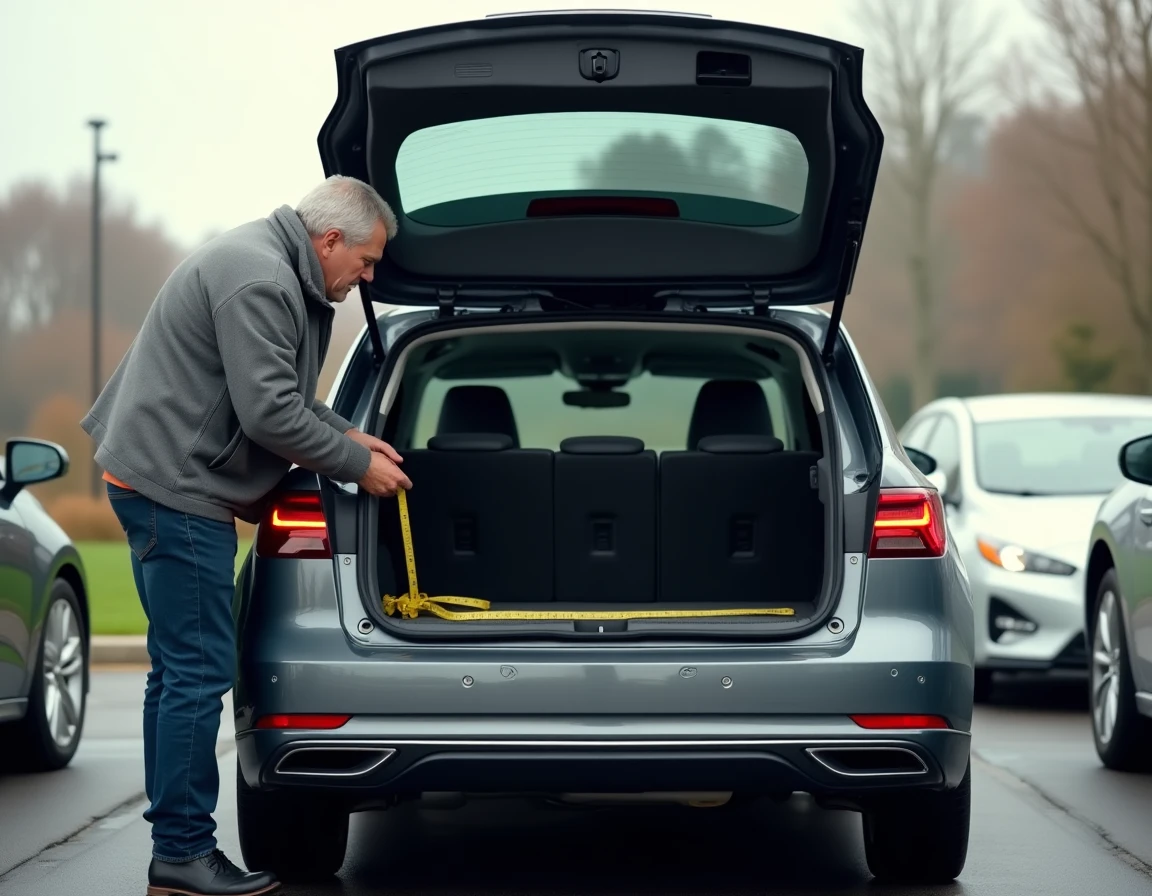
The trunk volume displayed on a technical sheet tells only part of the story. Between a thermal sedan, its plug-in hybrid variant, and an electric equivalent on a dedicated platform, the difference in usable liters depends less on the engine itself than on the architecture chosen by the manufacturer. In 2026, we observe counterintuitive situations that deserve a segment-by-segment examination.
Battery Placement and Real Impact on Trunk Volume
The determining variable remains the position of the battery pack. On natively electric platforms, the cells are housed under the floor, between the axles. The trunk then retains a comparable volume, sometimes greater, than that of a thermal vehicle of the same size, because neither the fuel tank nor the exhaust system encroaches on the rear space.
On thermal platforms adapted for electrification, the situation differs radically. PHEVs inherit an architecture designed for a combustion engine: the traction battery is squeezed in wherever possible, often under the trunk floor or behind the rear bench. The result is a loss of several dozen liters compared to the strict gasoline or diesel version of the same model.
As detailed in the article on Auto l’Hebdo, this difference in placement explains why comparing trunks by type of engine without considering the underlying platform leads to false conclusions.
PHEV and Reduced Trunk: The Family SUV Segment at the Forefront
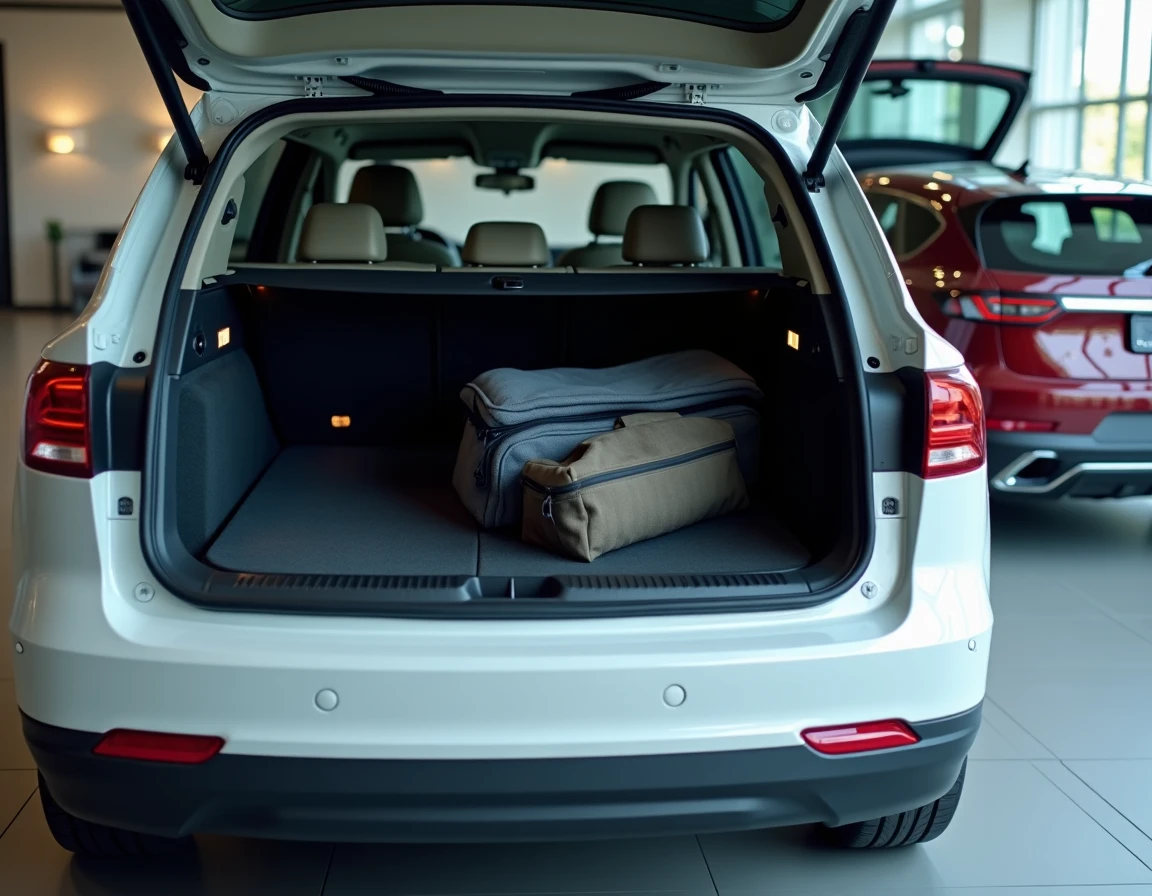
The phenomenon is most visible in 7-seater SUVs. Some plug-in hybrids drop below 200 liters in 7-seat configuration, with the third-row seats raised. A volume that makes the trunk almost unusable for everyday family use.
7-seater electric SUVs often offer more trunk space than their equivalent PHEVs. The Kia EV9 or the Tesla Model X, designed on dedicated platforms, take advantage of the absence of a fuel tank and complex mechanical transmission to free up space in the rear and sometimes in the front (frunk).
We recommend never relying solely on the maximum volume with the bench folded down to judge a 7-seater. The only relevant figure is the volume in real-use configuration, that is, with all seats in place.
Points to Check Before Buying a 7-Seater SUV
- The announced trunk volume with seats up, not just the maximum volume with the bench folded down, which artificially inflates the technical sheet.
- The presence or absence of a flat floor: some PHEVs impose a step in the trunk due to the positioning of the battery.
- The existence of underfloor storage, often removed on plug-in hybrid versions to accommodate the charging cable and auxiliary battery.
Sedans and Compacts: A Shrinking Gap on Native Platforms
In the compact and sedan segment, the trend for 2025-2026 is clear. Manufacturers developing natively electric platforms manage to offer trunk volumes very close to those of thermal vehicles. Hyundai illustrates this logic with the IONIQ 9 and the Staria, whose variations between versions remain limited thanks to the low placement of the batteries.
The situation is different for electrified models based on existing thermal platforms. A simple hybrid compact (HEV) loses little volume compared to the gasoline version, as the battery remains modest. However, its PHEV variant may sacrifice the spare wheel, the under-trunk storage bin, or even raise the loading floor by several centimeters.
Typical Trunk Volume Hierarchy for the Same Model
- Pure thermal: reference volume, low floor, under-trunk storage generally present.
- Simple hybrid (HEV): marginal loss, often limited to under-trunk.
- Plug-in hybrid (PHEV): notable loss, raised floor, frequent disappearance of lower storage.
- Electric on dedicated platform: volume close to thermal, sometimes greater due to the absence of a transmission tunnel and an usable frunk.

Reliable Comparison Criteria for Evaluating a Trunk in 2026
The gross liters announced according to the VDA standard remain a useful indicator, but they say nothing about the shape of the trunk, the height of the loading threshold, or the width between the wheel arches. A 450-liter trunk with a high threshold and sloped walls loads less than a well-designed 420-liter trunk.
In dealerships, we find that few buyers check the height of the loading threshold, which is crucial for everyday comfort. Electric vehicles on dedicated platforms tend to offer a lower threshold, with the trunk floor aligning directly with the top of the battery pack without elevation.
Comparing engines cannot be limited to a table of liters. Usable shape, bench modularity, the presence of a double bottom, and the loading threshold weigh as much as the gross volume. A family PHEV whose trunk falls below 200 liters in 7-seat configuration presents a practical usage problem that no ecological bonus can compensate for.